I spent my last morning in New Orleans on a tour of St. Louis No. 1 cemetery (there are 3 St. Louis cemeteries in the city).

In case you haven't heard of the Cities of the Dead, here's the brief explanation:
New Orleans is situated below sea-level. Which means that when the first settlers tried to bury their dead in traditional coffins, they dug down a few feet in the dirt and hit water. Not ones to give up, they tried pumping water from the graves and burying the coffins anyway. This seemed to work, until the first heavy rainstorm of the season brought the coffins popping up out of the ground to float down Bourbon Street.
Let's just say, when you bury grandma on Sunday, you don't want to see her drifting past on Thursday while you're enjoying an after-dinner drink.
This started a lot of superstitious traditions like the funeral parade -- the caravan leading the dead person's coffin was led in twisting, maze-like patterns through the city streets to confuse the dead person. That way if he or she ever... well, returned... they'd not be able to find their way around easily.
It also led to the New Orleans government having to find a better way to keep the dead underground where they belonged. Their inspiration came from the Spanish tradition of burying bodies in above-ground tombs.
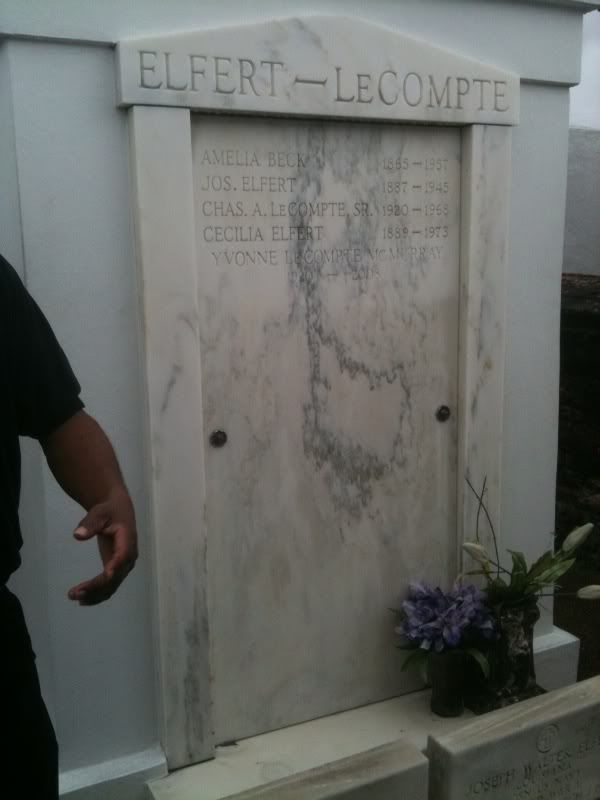
Basically, a family buys a tomb much like you'd buy a house -- nowadays they cost about $30,000 - $40,000 (depending on the size and features you'd like), and you pay perpetual care taxes (like property taxes: this means that the cemetery keepers make sure your tomb stays painted/de-weeded/still standing).
Now, you're probably wondering, wait. How does a whole family fit into one tomb? That space looks tiny!
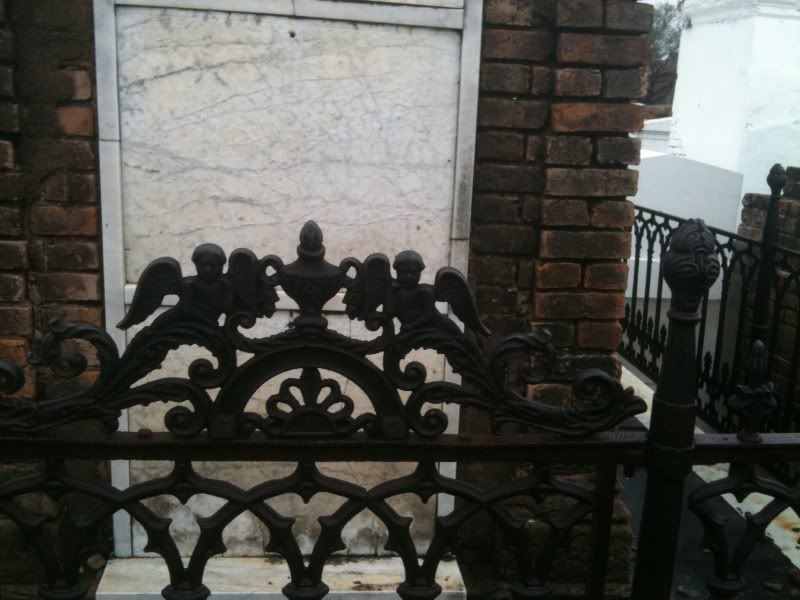
Well there's the fun part. They entomb the family's first deceased person in a pine box (the fancy coffin is just for the church funeral). The waiting period used to be a year and a day, but now it's as long as seven years due to embalming. During that time period, your loved one lies inside this hot crypt (shaped rather like a brick oven, if you'll notice), while temperatures outside soar to over the hundreds in the summer.
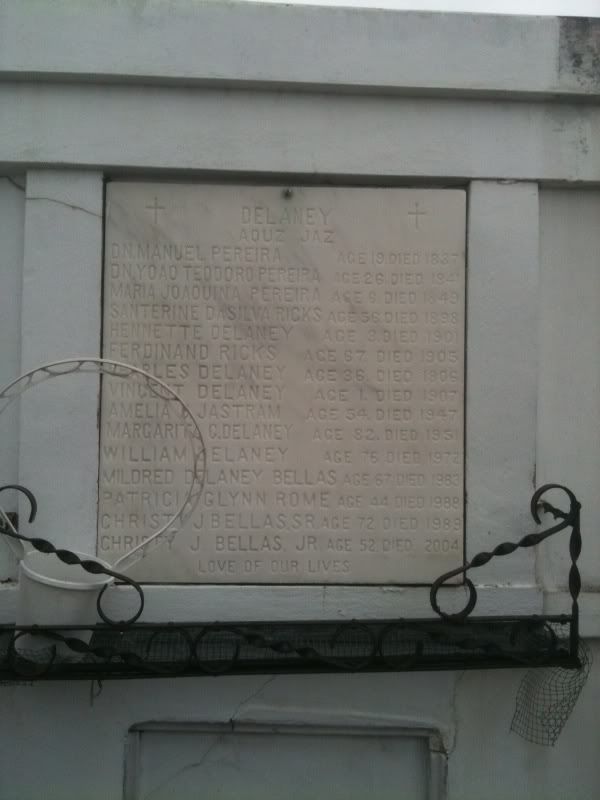
After the waiting period, when another member of the family passes away, the grave keepers reopen the tomb in preparation for the new inhabitant. They slide the pine box from its hollow opening, pop the lid, and... as the tour guide put it, "shake and bake." They open up a heavy-duty black plastic bag (essentially a garbage bag. Hey, they're sturdy!), and pour your loved one's remaining bits inside. At that point, pretty much all that's left are a few femurs and some dust (it's like a long-term cremation).
Let no one say New Orleans does not recycle!
Then they push that plastic bag far back in the tomb, and make a new pine box for the next relative. When his waiting period's up, he'll be added to the bag as well, and so on and so forth. You can pretty much fit an infinite number of relatives in the tombs with this process, since the little that remains in the bag when you shake-and-bake keeps disintegrating anyway.
Now, you're probably wondering what happens if another relative passes before the first one's waiting period is up. This is where the various tomb options come in.
There are several available. The "apartment" complexes:

Only hold one person at a time. If one of your relatives dies unexpectedly, and the apartment's already occupied, then you'll either have to find a friend's tomb to borrow, or hope there's a space in your society's tomb.
However, if your family owns a "house":
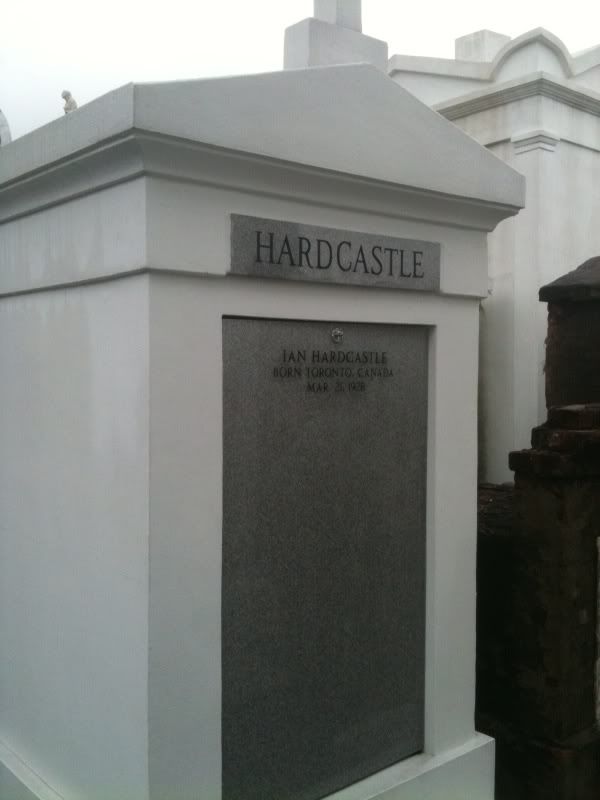 *
*You have two tombs available behind that door, one on top and one beneath. So as long as both tombs aren't occupied at once, you should have space for any unforseen accidents in the family.
Also, another bonus of these house-like tombs: the "body bag" doesn't share space with the coffin -- in these houses, there's a small "basement" space beneath the lowest tomb, where the older family members' remains are placed after their waiting period.
If you happen to be a society member in New Orleans, or in a Mardi Gras krewe, your krewe might have one of these grand skyscraper complexes:
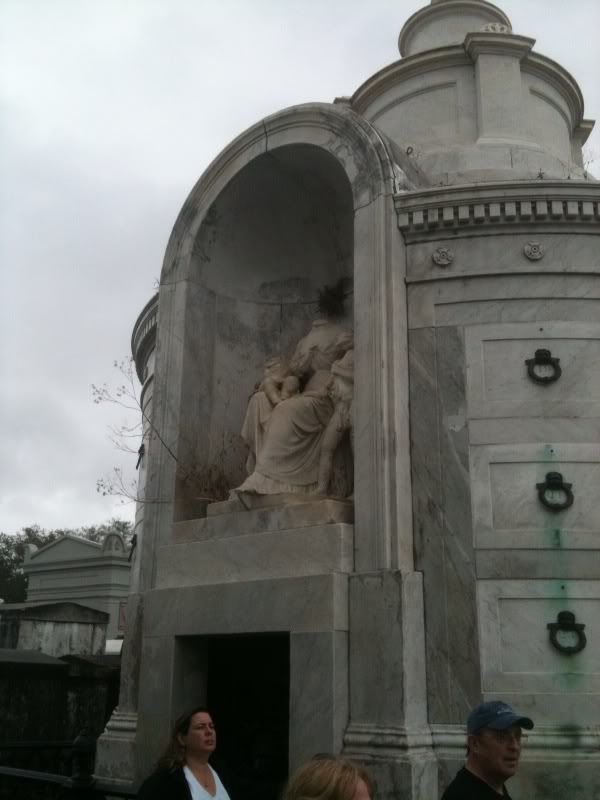
These massive structures have around 30-32 tombs each, plenty of space for all of their members. At the heart of the structure, beneath those decorative statues**, you'll notice a door space. Through there is a deep pit, around 12 feet, where the older remains are deposited.
In this cemetery, you can find quite a few well-known names in New Orleans history. The red X's all over this tomb mark the resting place of Marie Laveau:
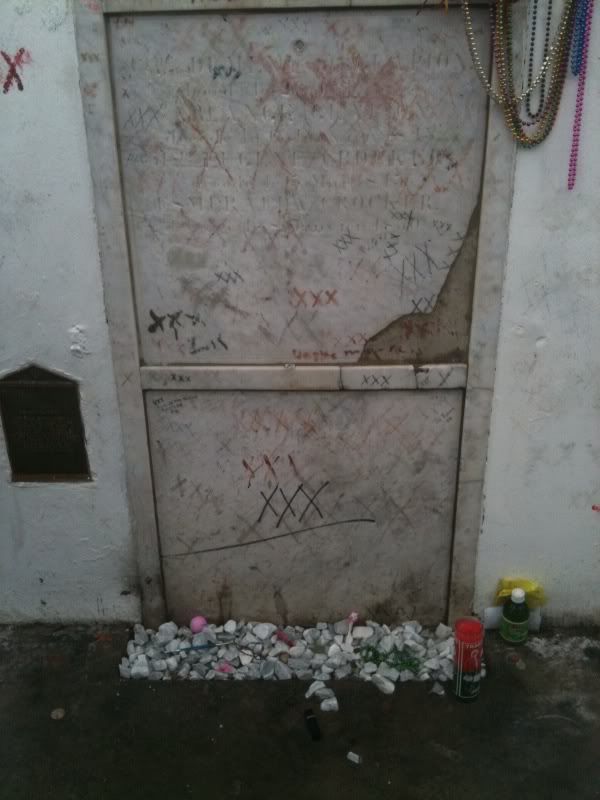
The famous voodoo queen of New Orleans. You're meant to draw three X's on her tomb (or knock three times, if you want to not vandalize the place, for which the caretakers would be very grateful), and leave an offering of pennies to make a wish.
As our guide led us through the cemetery, we passed this rather noticeable gravesite:
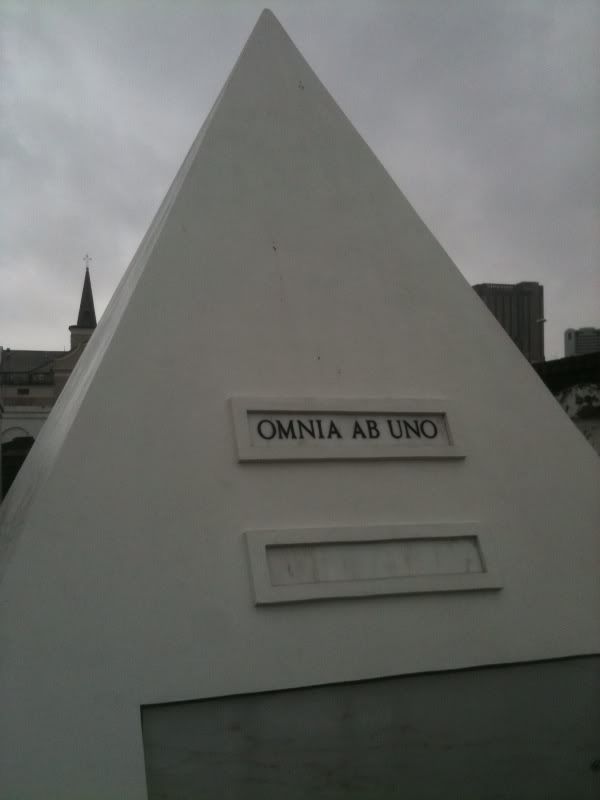
Whose style was not in keeping with the rest of the tombs at all. "Who ruined the neighborhood?" asked one of the other visitors on the tour.
"Ah yes," our guide replied. "That's Nicholas Cage's tomb."
Actors, pffft.
But even this well-tended and secure cemetery is not without its problems from the sea level, though. It's slowly been sinking over the years, to the point where many older tombs are unusable:
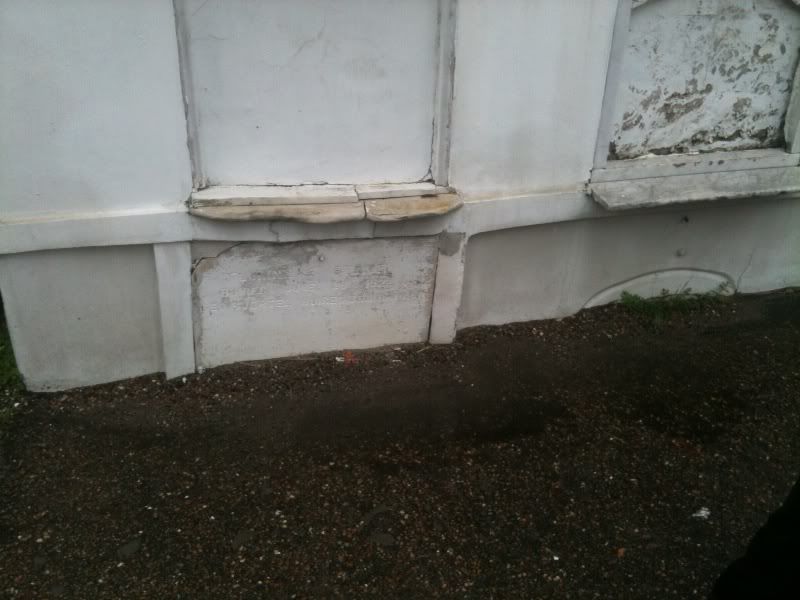
Yep, those doors used to start at about knee-height. Makes you wonder how much further the city will sink in years to come... Yikes!
* For anyone who's watched Wizard People, Dear Reader... Professor Hardcastle McCormick!!
** If you look closely, you might be able to tell that these statues are missing their heads. Rumor has it that during the filming of Easy Rider, the cast had a few too many "special" brownies and chopped the heads off for souveniers.
This is fascinating. I had no clue about any of this.
ReplyDelete